Su Jok Therapy
SU JOK ATLAS - click to view
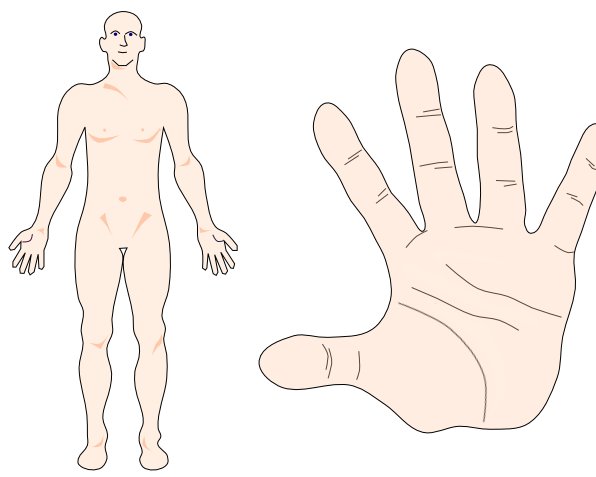
When the founder of Su Jok acupuncture, my teacher Professor Park Jae Woo, first discovered the correspondence systems of the hand and foot, it was like an epiphany—he looked at his hand and recognized its similarity to the body. He transferred the projections of diseased organs he knew onto the hand and found their painful correspondences; after massaging them, the pain disappeared and the organ recovered. Thus, the great medicine of Su Jok acupuncture was born.
Nature has endowed humans with enormous resources of internal resilience and capacity for self-healing. Su Jok acupuncture and its correspondence system illustrate one such internal mechanism of self-regulation and the possibility of simple self-treatment through massage of points on the hand and foot.
The human body contains a vast multitude of projection systems (body correspondence systems) that are holographic copies of the entire organism or its various parts. Su Jok correspondence systems can be located on the surface in skin layers, internally in muscle layers, fascia, and organ structures. They function as remote control systems for the body, regulating various biological processes of our organism's vital activity, like a television remote control.
The functioning and mechanism of action of Su Jok correspondence systems can be described as follows: At the moment an organ or body part is affected by disease, certain shifts in electromagnetic membrane potentials occur at the cellular level, and an informational wave is generated to all surrounding tissues about the need for assistance to the affected area, as well as about the changes that have occurred in it. This—let us conditionally call it the electromagnetic regulatory system of the body—arose long before the appearance of humoral and nervous systems and is the most "low-level" link of cellular control.
In response to the electromagnetic and informational wave, special areas called "correspondence balls" simultaneously arise in all Su Jok correspondence systems. Such areas are highly sensitive to external influences and painful under mechanical pressure. Natural (arising from body movements) or artificial stimulation of these point-balls leads to the formation of a therapeutic response. Stimulation of Su Jok correspondence points induces powerful positive shifts throughout the human body. Microcirculation normalizes in the disease area, tissue structure restoration and cell repair processes are initiated. The function of many organs changes systemically to improve the functioning of the affected area. Autonomic nervous system responses change, necessary hormones are produced, and energy-informational interactions are corrected. As the healing process is initiated, the central nervous system no longer needs to signal organ distress and the need for assistance. Pain disappears, and along with it the disease vanishes; structure and function are restored. And all this from a small impact on a Su Jok point.
Treatment in Five Steps
This treatment is used for chronic pathological processes.
First step of Su Jok therapy: Stimulation of points in one of the standard correspondence systems of the hand and/or foot is performed, selecting only the most painful points for treatment.
Second step of Su Jok therapy: Stimulation of additional points is performed. These points include painful correspondence balls that can be easily found around the primary correspondence point.
Additionally, a special "controlling" point is used in therapy, which is not directly located in the correspondence zone of the diseased organ but possesses high effectiveness in its treatment. The controlling point exhibits pronounced tenderness. Point selection is conducted based on information about the interaction of certain organs and their regulatory systems. For example, in lung diseases, the controlling Su Jok point may be located in the throat or nose projection area (primary disease development zone). In pathological processes in the ear area—the painful point corresponds to a tooth (primary infection focus).
Special "specific points" are used in treating certain chronic diseases and conditions requiring urgent care. In emergency situations requiring activation of the self-regulation system, stimulation must be performed in zones corresponding to nerve centers and vital regulators, such as the medulla oblongata (centers of cardiac-vasomotor and respiratory activity, cough center, etc.). The medulla oblongata projection zone is affected in respiratory failure, cardiac activity disturbances, and agonizing cough attacks.
Special attention is given to endocrine gland projections. In treating allergies, itching accompanying dermatitis, spastic lung obstruction, and bronchial asthma, Su Jok therapy includes points corresponding to the adrenal glands.
The adrenal glands, medulla oblongata, and heart are also stimulated in extreme, life-threatening situations, such as those related to pain shock or blood pressure drop.
In diseases of the endocrine gland system, in addition to the main therapeutic zones, it is advisable to affect projection points of the pituitary and hypothalamus (endocrine system regulators).
In chronic infectious processes, it is important to activate immunity function; therefore, comprehensive treatment of such conditions includes zones corresponding to the thymus (thymus gland).
Third step of Su Jok therapy: Considering that the organism is a unified integral system whose internal connections between parts can determine the development of diseases in some organs under the influence of others' conditions ("pulmonary heart," "neurogenic stomach," "diabetic kidney"), effective comprehensive treatment in steps should include impact on the main painful projection points of other organs involved in the process.
Fourth step of Su Jok therapy: At this step, impact on sensitive points in the spinal cord projection zone is included, which plays an important role in regulating all vital processes in the human body. Stimulation of painful points in the spinal cord correspondence area effectively increases therapeutic effect in treating various diseases.
Fifth step of Su Jok therapy: Since the brain exercises the highest controlling function in the human organism, at this therapy level, stimulation of painful points in the brain projection is used. This activates all links of nervous harmonization and all self-restoration resources.
Several points can be found in the brain projection area. Using a diagnostic probe, the most painful ones are selected.
Five-step Su Jok therapy was created to enhance therapeutic effect in complicated, severe, prolonged, or chronic diseases. Many simple diseases can be successfully treated using only first and second step methodology. For more complex conditions, application of the third, fourth, and fifth therapeutic steps is indicated.
Su Jok Acupuncture Principles Considering Energy Movement Direction
From the Su Jok therapy perspective, plants, like other living organisms, have their own energy system determining their vital activity. Energy circulation within a plant can occur simultaneously in different directions through multiple energy channels; however, seeds have a predominant energy flow direction coinciding with the seed germination direction and adult plant biological growth.
For Su Jok treatment of constipation, magnet orientation is positioned in the large intestine projection zone considering the coincidence of the magnet's energy current with the intestinal evacuation direction. For appetite reduction—a magnet can be positioned in the esophagus and stomach correspondence area so that the energy axis is opposite to peristalsis and weakens their functional activity.
For Su Jok obesity therapy, magnets are positioned in the mouth and stomach entrance projection area, directing the energy flow against food passage. In the intestine correspondence area, magnets are installed in a chain along the peristaltic wave (as with constipation), promoting faster fecal mass removal and general detoxification.
In Su Jok therapy for organ prolapse or protrusion, therapeutic magnets are installed in a direction opposite to the prolapse, as if "supporting" the descended organ.
In impotence therapy, it can be applied to enhance kidney function, which will increase testosterone secretion and improve circulation. These magnet properties are also used in Su Jok therapy for strabismus.
For bronchial drainage and cleansing (in diseases with viscous, difficult-to-expectorate sputum accumulation), magnets are positioned in the lung correspondence area, filling the space from diaphragm to trachea, positioning the energy current vector toward the tracheal exit. Such magnet placement will produce an expectorant effect.
In spasmodic processes (renal and biliary colic, peripheral artery spasms), magnets are installed so that their internal energy flows are directed along the vector from center to periphery, producing expansion of the spasm zone.
When treating reflux (gastric, intestinal—reverse casting of one organ's internal contents into another's cavity), hernias (inguinal, femoral, intervertebral), enuresis, there is a need to create reverse energy flow and valve closure. For closure, magnets are used, installed so that their energy current is directed from the peripheral zone to the center.
Su Jok Therapy
In translation from Korean, Su means hand, Jok means foot. The Su Jok diagnostic methodology consists of searching on the hand and foot in specific zones—which are reflected reflex projections of internal organs, muscles, and spine—for painful correspondence points (Su Jok correspondence points) indicating particular pathology. Possessing a large number of nerve endings, the hand and foot are connected to various parts of the human body. When a pathological process arises in body organs, painful "correspondence" points arise on the hands and feet—connected to these organs. By finding these points, a Su Jok therapist can help the body cope with disease by stimulating them with needles, magnets, moxas (warming sticks), light modulated with specific waves, seeds (biologically active stimulators), and other influences depending on the needs of the chosen treatment methodology.
Later, similar correspondence systems were discovered on the ear (auricular Su Jok therapy), scalp (scalp Su Jok scalp therapy), tongue, and other body parts.
Using the principle of body-hand similarity, Professor Park proposed conducting meridional acupuncture on it as well. A theory of the Byol meridian system and their acupuncture points was developed and clinically confirmed. Developing classical Chinese medicine principles in Su Jok therapy, Professor Park developed treatment methods for harmonizing Six Ki and Eight Ki, emotional and mental treatment through meridians, open point method treatment, diamond and spiral energy systems, and tri-origin.
Today, the Su Jok system is structured and diverse, and its methods have proven effective in treating various diseases.
Self-Treatment and Self-Diagnosis
The Su Jok system includes many treatment methodologies. The most accessible, simple, and sufficiently effective is the methodology of affecting correspondence points to organs and body parts on the hand, foot, and ear. After familiarizing oneself with the hand map and recognizing its similarity to the human body, anyone, after brief training, will master Su Jok treatment techniques and be able to help themselves and loved ones.
By projecting internal human organs and bones proportionally onto this likeness, dividing the thoracic and abdominal cavities by the diaphragm line corresponding to the life line on the hand, Professor Park discovered the standard correspondence system.
In the standard Su Jok system, the chest is located on the elevation at the base of the thumb on the palm surface of the hand; the abdominal cavity occupies the remaining palm area. When conducting diagnostics using Su Jok correspondence systems, painful points corresponding to the patient's affected organs can be found.
In different people with similar diseases, points showed some differences in location—corresponding to individual characteristics of localization and stage of the pathological process. During Su Jok treatment sessions—massaging points with a wooden or metal stick for 30-90 seconds—points disappeared, and along with this, organ pain subsided. After several such sessions—painful sensations completely disappeared; when conducting objective examination methods (Thermometry)—a healthy organ picture was observed. The professor hypothesized the existence of a regulatory system for which information is communicated from correspondence points. Further research and clinical trials confirmed his conclusions. Thus, Su (hand) Jok (foot) therapy was born.
Having familiarized ourselves with correspondence systems, we can proceed directly to diagnosis and treatment.
Diagnosis using the standard Su Jok hand or foot system is performed according to the scheme:
- Determine in which of 7 areas (head, four extremities, chest, abdominal cavity) the pathological process is located.
- Clarify whether the troubling organ is above or below the diaphragm. Location above the diaphragm indicates chest organ damage; on the hand, this zone corresponds to the thumb elevation. Below the diaphragm are abdominal cavity organs.
- Determine the choice of approach to affecting the organ from the back of the hand or palm side. The back of the hand corresponds to the posterior body surface and is chosen for affecting the spine, kidneys, back muscles, etc. The palm surface is convenient for Su Jok treatment of abdominal cavity organs, heart, and lungs.
In this case, the middle finger of the left hand corresponds to the left leg, right hand—right leg; ring finger of left hand—right leg, right hand—right leg. Anterior surfaces and patella areas are projected onto lateral surface zones of the middle and ring fingers facing the index finger and little finger. A person projected onto the hand stands with feet turned outward, hiding the posterior leg surface.
- Determine in which body half the troubling organ is located. If hands are positioned with open palms forward, on the left—closer to the thumb projects the left body half, to the little finger—right, in the center between 3 and 4—midline; on the right—from the midline to the little finger projects the left body half, to the thumb—right.
- Finally, determine the therapeutic point in Su Jok therapy by searching for sharp tenderness with alternating pressure in different parts of the presumed affected organ projection zone. Pressure can be applied with any handy objects—matches, pencils, or special probes. It is important to maintain equal pressure when pressing different zones—this allows precise determination of the desired correspondence point.
After the sharply painful point corresponding to the affected organ is found, proceed to treatment.
Treatment impact options in Su Jok are diverse.
This can be:
- Simple pressure and kneading with a probe until pain relief effect
- Warming with special medicinal cigars or pepper plaster for colds. Warming should not be used for treating acute inflammatory abdominal organ diseases, such as appendicitis, acute edematous stage intervertebral disc herniation (heating the back area), arterial hypertension (heating the heart area)—that is, cases where warming these body areas is medically contraindicated
- Massage and kneading. The technique is especially effective when performed in the Su Jok ear correspondence system. Wrist and finger joint kneading is also useful—according to Chinese concepts, this action causes release of qi energy accumulated in joints
- Acupuncture, bloodletting with scarificator—with pronounced stagnation, edema, thick black blood is released—it must be blotted without stopping
Magnet Therapy
A magnet applied with its north pole gives energy to tissues, stimulates them; this is useful in deficiency diseases, organ weakness, need for support, chronic diseases. Applied with its south pole—the magnet takes energy; this is useful in acute diseases with energy excess, hyperactive conditions. Before long-term magnet placement, it is important to conduct applicative diagnostics. After applying a magnet with either pole for 15-20 minutes, determine whether general condition improves or worsens, and the condition of the troubling organ. If condition improves, the magnet is secured with plaster and worn until complete symptom resolution. If well-being worsens—the magnet is turned to the opposite side.
Seed Therapy
Seeds are biological stimulators. Secured with plaster in the Su Jok projection of the affected organ, under body moisture and temperature influence, seeds release biologically active substances, promoting selective stimulation of correspondence points. Application time—8-24 hours. For eye treatment—black peppercorns are used; for spine—buckwheat seeds; for heart—red viburnum; abdominal cavity organs are treated with corn, pumpkin seeds; lungs—rice seeds; brain—walnut; kidneys—red beans. Apple seeds, mung beans, and buckwheat have universal healing properties. For colds, hot pepper seeds are effective.
Stopping Bleeding Using Elastic Band
The technique is performed using a black elastic band or thread with which the projection area is tied above the wound projection site, as if applying a regular tourniquet. Since the hand is very resistant to hypoxia—there is no danger if a finger turns blue for some time, venous stagnation forms. Bleeding stops within 30-60 seconds. After removing the elastic—the finger quickly restores its color; stopped bleeding does not resume.
Stretching Impacts in the Su Jok Correspondence System are used for treating spinal problems. The spine projection zone is fixed between two fingers of the other hand and stretched with slight force along the vertical axis.
The lumbar spine projection can be stretched by gentle traction on the middle and ring fingers corresponding to the legs. The neck projection is stretched by traction on the nail phalanx of the thumb corresponding to the head.
A remarkable feature of the hand is infection resistance. No special treatment is needed before treatment; washing hands is sufficient. On the ear, one should be more cautious and not independently use acupuncture and bloodletting to avoid damaging cartilage.
In absence of special instruments in emergencies, any objects can be used to stimulate correspondence points—keys, pencils-pens, and even teeth biting.
It should be remembered that of two variants of impact effects—therapeutic and potentially dangerous—the body always chooses the therapeutic variant. This feature makes correspondence systems safe and treatment using them simple and effective.
Su Jok (Resuscitation Methodology)
Standard Su Jok hand and foot correspondence systems can be used in emergency care for loss of consciousness, pronounced arterial hypotension, pain, traumatic shock. The resuscitation methodology combines impact on key vital organ correspondence projections and classical acupressure techniques—pressure on Chinese meridian points.
Stage 1: Strong pressure, kneading is performed in projection zones:
- Brain (top and sides of thumbnail)
- Medulla oblongata (nail base—vasomotor center)
- Heart zone (middle of thenar—palm elevation at thumb base)
- Kidney zone (two depressions between 2-3 and 4-5 fingers in middle of hand back)
- Navel zone (palm center)
Stage 2: A rapid series of strong vibrating pressures or intensive massage is performed—12 movements clockwise and 12 movements counterclockwise.
Zu-san-li — "longevity point" — symmetrical point, located on the stomach channel, 4 fingers below the outer edge of the kneecap (below the fibular head, lateral to the tibial tuberosity).
10 shi-xuan points — "ten signs of life points" — located on the tip of each finger, 3 mm from the nail (on the finger pad). In the correspondence system, these are brain projections.
Ren-zhong — "return to life point" — located on the posterior median channel, under the nose, in the upper third of the nasolabial vertical groove.
Point — anterior median channel under the lower lip.
Kun-lun — symmetrical point, located on the bladder channel, at the posterior edge of the ankle in a depression, midway between the ankle and Achilles tendon.
Nei-guan — symmetrical point, located on the pericardium channel, three fingers above the wrist fold in the middle of the forearm.
Wai-guan — symmetrical point, located on the "triple warmer" channel, on the dorsal forearm surface, three fingers above the wrist in the middle of the forearm.
He-gu — symmetrical point, located on the large intestine channel, on the dorsal hand surface, in the middle of the skin fold between the bases of the thumb and index finger bones.
The sooner therapeutic impact begins—the faster the effect onset. If loss of consciousness is accompanied by cessation of breathing and cardiac activity, the methodology is combined with artificial respiration and indirect cardiac massage. In absence of assistants, technique execution is limited to hand impact and is conducted during the artificial lung ventilation phase, when the resuscitator has the opportunity to use the unoccupied hand for Su Jok treatment.
Basic Energy Points Self-Restoration Methodologies
A good opportunity to raise overall body tone, increase its anti-stress capabilities, and also nonspecifically treat a broad spectrum of diseases is the methodology of affecting basic energy points. In the body, at these point projections, various meridians connect, forming so-called energy seas. These are entry-exit points and accumulation of the body's energy resources, powerful reflex fields exerting stimulating action on all body organs and systems. Impact on them balances extreme deviations in Chinese meridians, brings the body to balance and good well-being.
The most effective method of affecting BEP is warming with special medicinal cigarettes for 10-30 seconds per point, starting from the lower point on the back of the hand and ending with the lower point on the palm surface. In absence of medicinal cigarettes, incense sticks, smoking cones, or as a last resort, regular cigarettes can be used. At point X17 (heart sea), one should not linger more than 5 seconds. For point stimulation, it is also effective to use pepper plaster for 15-60 minutes, amber, black pepper seeds, yellow peas, coloring points red, performing vertical micronedle placement.
Common Cold
Rid yourself of runny nose by stimulating nose correspondence points located on palm and plantar surfaces in the center of the nail phalanges of the thumb pads. For painful point impact, color therapy can be used, activating wind energy. To do this, draw a small green circle on the nose correspondence point or attach a green grain to it and massage with it.
Relief from sore throat is helped by massaging larynx correspondence points (thumb pad center) and tonsils (below mouth corner projection).
Cough can be treated by stimulating larynx, trachea, bronchi, and lung correspondence points. Find the most painful places in correspondence zones and massage them with a diagnostic stick or finger for 3-5 minutes, then warm them with a mugwort cigar or micromoxa. Prolonged stimulation can be achieved by attaching black pepper, radish, buckwheat, lentil, or lemon seeds to points using plaster.
Rid yourself of elevated temperature by affecting brain points, which by the insect system are located on all fingertips. Apply ice pieces to them, then color them black. Alternatively, draw black lines on the palm surface of index fingers, starting at the nail plate corner and ending at the fold level between middle and main phalanges.
Bronchitis
Rid yourself of bronchitis through intensive warming massage of larynx, trachea, bronchi, and lung correspondence points, then place buckwheat, rosehip, beet, apple, or black pepper seeds on painful places. Mustard plaster pieces can be applied to lung correspondence zones and held until burning sensation appears. To facilitate sputum discharge, massage respiratory tract correspondence zones using apple, melon, watermelon, zucchini, or grape seeds.
Headache
Headache can be eliminated by paying attention to its localization area. By the insect system, the head corresponds to the nail phalanges of the hand and foot. If frontal head pain bothers you, massage the upper third of nail phalanges. The parietal area corresponds to fingertips, temporal—points on lateral finger surfaces. The occiput is projected onto the dorsal finger side. Stimulate painful points with a diagnostic stick, pen, or nail for 2-5 minutes. If after massage the pain decreased but did not pass, secure plaster with buckwheat, millet, or rice seeds on painful points and leave for 6-8 hours, occasionally massaging points with them.
Headache is often caused by internal organ diseases. Gallbladder problems can provoke temporal pain; cervical spine and bladder can cause occipital pain. An unhealthy stomach can be the culprit of unpleasant frontal head sensations. In these cases, stimulation of diseased internal organ correspondence points must be conducted according to the same scheme as ordinary headache.
When head pain is caused by elevated blood pressure, the middle part of the thumb must be tightly bandaged with elastic and sharply removed after the finger color changes. After this, fingertips should be colored black and rice, buckwheat, or millet grains attached to painful correspondence points.
Heart Pain
Heart pain can also be independently relieved using Su Jok methods. According to the standard correspondence system, the heart projection is in the lower palm thenar part. When sudden pain occurs, immediately massage the correspondence zone with a finger or massager for 3-5 minutes, then secure viburnum, cucumber, zucchini, or pumpkin seeds on the most painful points.
Spinal Pain
For spinal pain, the insect system should be used. Correspondence zones of different spinal sections are on the dorsal surface of all fingers. To relieve the condition, affect painful points with a massage ring or fingers for 3-10 minutes, then apply black pepper, buckwheat, or radish seeds in a chain to the correspondence zone and secure with adhesive plaster.
Toothache
For finding tooth correspondence points and eliminating toothache, it is most convenient to use the "animal head" system, in which all tooth projections are located along the nail plate edge of each finger. To relieve pain, find the most painful point in the indicated zone and stimulate it with a diagnostic stick for about 2-5 minutes, then attach a buckwheat grain to the point and press on it until pain completely stops.
Insomnia
For insomnia, light stimulation of occipital, cervical spine, and kidney correspondence zones is useful. Also, while lying in bed, put an elastic band on the lower part of the thumb without tightening strongly and leave until light drowsiness onset.
As already written above, Su Jok therapy methodologies are primarily aimed at independent assistance provision and always produce positive results. Additionally, they have no contraindications and side effects and can be applied even in childhood. Considering that most Su Jok methods contradict official medicine, not all doctors recognize them. But there are also doctors who, after unsuccessful attempts at treatment with conventional drugs, advise their patients to consult Su Jok specialists. As a rule, after visiting them, a person manages to restore lost health.
Perhaps among the publication's readers there are people who managed to heal using the wonderful techniques of Su Jok therapy. I would like them to personally comment on the article and share their treatment methods using this methodology.
